
 Français
 Español
 Português
 Русский
 Italiano
 日本語
 Deutsch

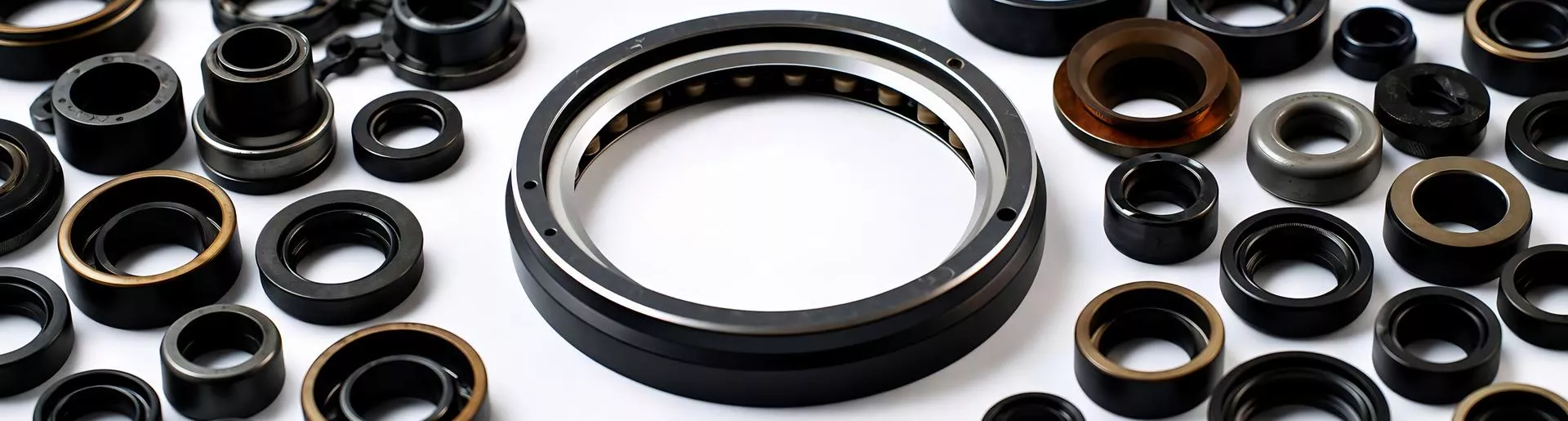
PTFE Seals for Chemical Processing, Food Equipment and High-Performance Machinery
Introduction
Polytetrafluoroethylene (PTFE), commonly known as Teflon, is an engineering polymer widely used in sealing applications that require chemical resistance, low friction and stable performance.
Compared with conventional elastomers, PTFE has different mechanical behavior. It has low friction and broad chemical resistance, but it does not recover elastically in the same way as rubber. Consequently, PTFE seals often require carefully designed profiles, clearances and energizing mechanisms.
The material is especially useful when the operating conditions make conventional rubber seals less suitable.
Key Properties of PTFE
PTFE offers several characteristics that make it valuable for industrial sealing:
Chemical resistance: Resistant to many acids, bases, solvents and process chemicals, subject to compatibility verification.
Low friction: Helps reduce frictional resistance in suitable dynamic sealing designs.
Temperature capability: Virgin PTFE is commonly used in applications spanning approximately -200°C to +260°C, subject to design and service conditions.
Electrical insulation: Useful in selected electrical and electronic equipment.
Low moisture absorption: Helps maintain material stability in many environments.
These characteristics do not mean every PTFE seal can operate continuously at the material's maximum temperature or under every chemical exposure.
Common PTFE Seal Designs
PTFE lip seals: Used in selected rotary and reciprocating applications where low friction is important.
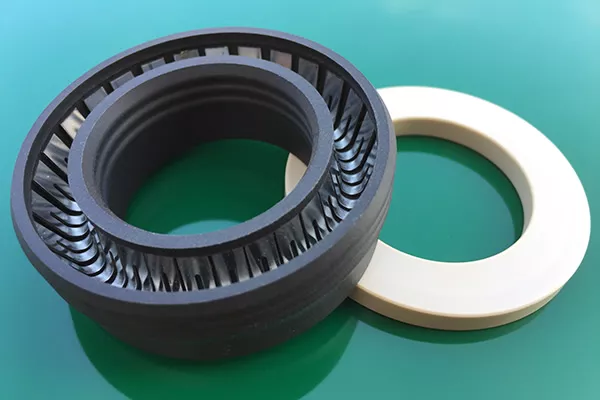
Spring-energized PTFE seals: Incorporate a spring to maintain sealing contact and compensate for certain changes in the sealing interface.
PTFE backup rings: Used in conjunction with elastomer seals to help reduce extrusion risk in suitable pressure applications.
Custom PTFE components: Manufactured to particular dimensions and profiles for specialized equipment.
Filled PTFE compounds containing materials such as carbon, graphite or other compatible fillers may improve selected mechanical properties. However, the filler must be chosen according to the medium, counterface and operating conditions.
Industries and Applications
PTFE sealing products are used in chemical pumps, process valves, dosing equipment, semiconductor-related machinery, pharmaceutical manufacturing, food-processing equipment and specialized hydraulic systems.
In chemical processing, the priority is compatibility with the process medium. In food and pharmaceutical equipment, buyers must additionally consider regulatory compliance, cleaning procedures and material traceability.
In semiconductor and precision equipment, low particle generation, cleanliness and controlled outgassing may be important selection criteria for specialized seal designs.
Technical Selection Guide
Parameter | What to evaluate |
|---|---|
PTFE formulation | Virgin or filled PTFE |
Temperature | Normal, minimum and maximum operating conditions |
Pressure | Static or dynamic pressure and extrusion clearance |
Motion | Rotary, reciprocating or static |
Chemical medium | Specific fluid and concentration |
Counterface | Surface finish, hardness and wear characteristics |
Regulatory requirements | Applicable food-contact or industry standards |
Conclusion
PTFE is not simply a replacement for rubber. It is a specialized sealing material whose advantages depend on the correct design and operating conditions.
GUOHAO SEALS can evaluate PTFE sealing requirements based on drawings, dimensions, operating conditions and application-specific material needs.
 Contact Us
 guohao@zgghmf.com
 86-0769-88032701
 +86 18200850198