
 Français
 Español
 Português
 Русский
 Italiano
 日本語
 Deutsch

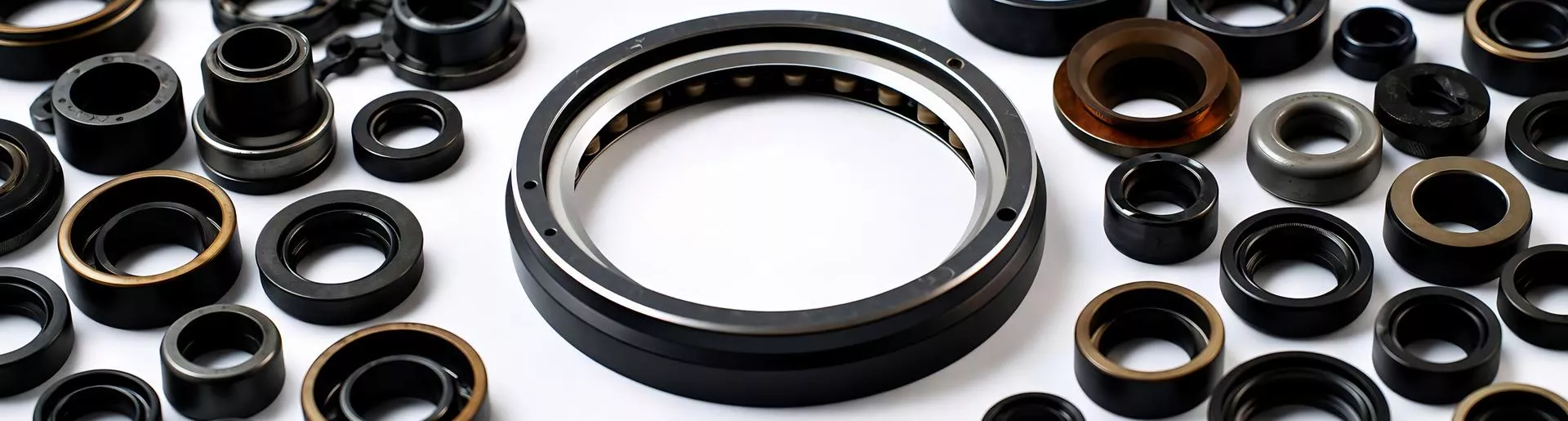
Industrial Oil Seals: Design, Performance and Applications Across Multiple Industries

Introduction
Oil seals are essential components in equipment containing rotating shafts. Their primary function is to retain lubricants inside a housing while helping prevent dust, moisture and other contaminants from entering the mechanical system.
A conventional radial shaft oil seal usually consists of an elastomer sealing lip, a reinforcing structure and, in many designs, a garter spring. The lip contacts the rotating shaft and forms a sealing interface that controls lubricant leakage.
Although oil seals are relatively small components, their performance can directly affect bearing life, lubrication efficiency, equipment cleanliness and maintenance intervals.
How Do Oil Seals Work?
When installed correctly, the sealing lip maintains contact with the shaft surface. The design must balance sealing force, friction, heat generation and lubrication.
Excessive contact pressure may increase friction and temperature, accelerating lip wear. Insufficient contact or an unsuitable shaft surface may lead to leakage.
The performance of an oil seal therefore depends on the complete system, including the shaft, housing, lubricant, operating speed and temperature.
Common Oil Seal Materials
NBR oil seals: Frequently used in general machinery, gearboxes, pumps and automotive applications involving compatible oils.
FKM oil seals: Often considered for higher-temperature applications and selected oils, fuels and chemical environments.
PTFE oil seals: Suitable for specialized applications requiring low friction, chemical resistance or particular high-speed and temperature capabilities. The actual limits depend on the seal design and PTFE compound.
Metal-cased or stainless-steel designs: May be appropriate where structural support, corrosion resistance or specific installation requirements are important.
Important Technical Parameters
Parameter | What to evaluate |
|---|---|
Shaft diameter | Correct fit and dimensional tolerance |
Rotational speed | Surface speed and frictional heat |
Temperature | Lubricant and seal material limits |
Pressure | Whether the design is intended for pressurized service |
Shaft finish | Surface roughness, hardness and lead characteristics |
Lubrication | Oil type, viscosity and supply conditions |
Installation | Concentricity, alignment and lip protection |
For example, a conventional rotary shaft seal is not automatically suitable for a high-pressure hydraulic system. Such applications may require a specialized pressure-rated design.
Industrial Applications
Oil seals are commonly used in:
Automotive engines, transmissions and wheel hubs.
Electric motors, gearboxes and industrial drives.
Hydraulic pumps and selected fluid-handling equipment.
Agricultural machinery and construction equipment.
Manufacturing machinery and conveyor systems.
Industrial fans, mixers and rotating equipment.
In automotive and heavy machinery applications, the correct seal helps retain lubricant and reduce contamination. In manufacturing equipment, it can help minimize unscheduled downtime caused by leakage.
Conclusion
Oil seal selection should be based on shaft conditions, rotational speed, temperature, lubricant compatibility and pressure requirements.
GUOHAO SEALS offers oil sealing product options for industrial equipment. Providing a shaft drawing, operating conditions and application details helps establish a more appropriate product specification.
 Contact Us
 guohao@zgghmf.com
 86-0769-88032701
 +86 18200850198