
 Français
 Español
 Português
 Русский
 Italiano
 日本語
 Deutsch

Seals for Automotive Manufacturing: Applications, Materials and Performance Requirements
Introduction
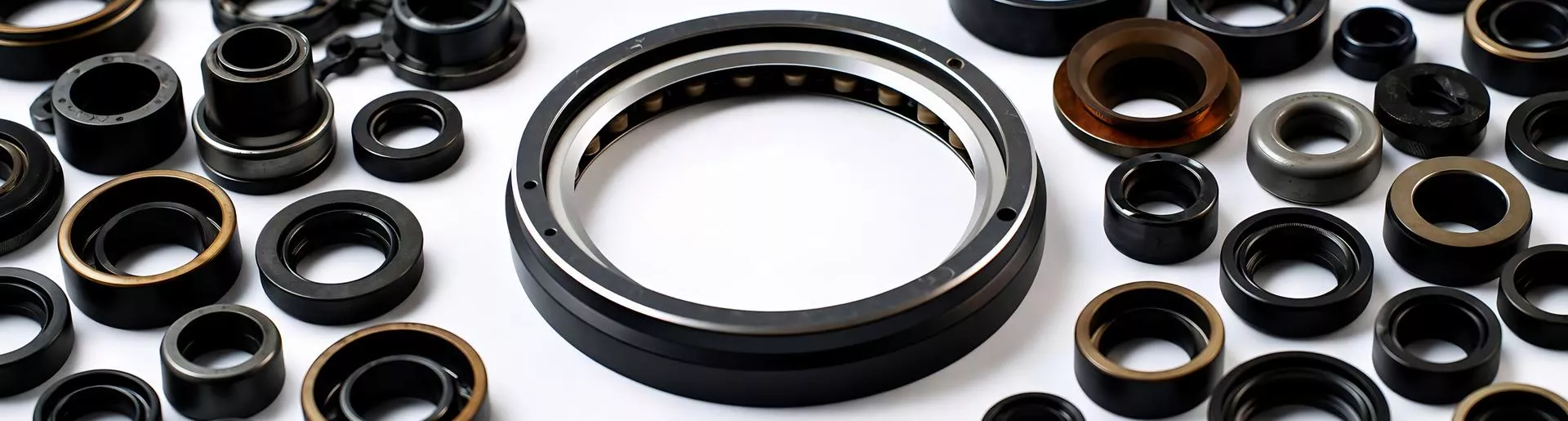
Automotive equipment contains numerous sealing points where fluids, gases and contaminants must be controlled. Seals are used in engines, transmissions, pumps, cooling circuits, fuel systems, steering equipment and many auxiliary components.
As automotive systems evolve, sealing requirements are also changing. Conventional vehicles rely on lubrication and fuel-system seals, while electric vehicles introduce additional requirements involving thermal management, coolant compatibility and electrical component protection.
Selecting the correct seal helps reduce leakage, protect sensitive components and support long-term equipment reliability.
Common Automotive Sealing Products
Oil seals
Rotary shaft oil seals help retain lubricants in engines, gearboxes, wheel hubs and other rotating assemblies.
O-rings
O-rings are widely used in static joints, fluid connections, pumps, valves and selected fuel or cooling systems.
Y-rings and lip seals
These are used in selected reciprocating mechanisms and hydraulic or pneumatic components.
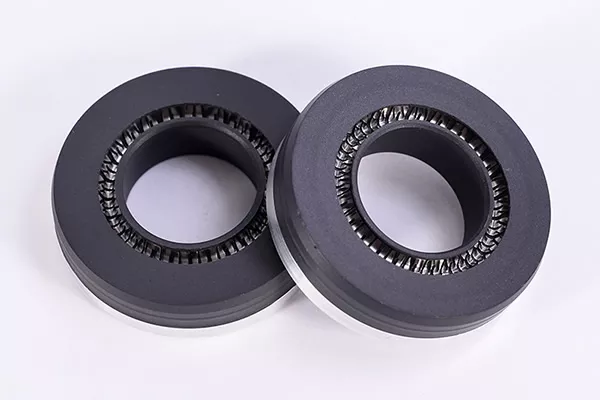
PTFE seals
PTFE sealing designs may be considered where low friction, chemical resistance or specific temperature requirements make them suitable.
Custom rubber seals
Special profiles may be required for housings, connectors, fluid passages and equipment-specific assemblies.
Automotive Materials and Typical Uses
Material | Common applications | Selection considerations |
|---|---|---|
NBR | Lubrication and compatible oil systems | Temperature and fluid compatibility |
FKM | Selected high-temperature oil and fuel applications | Chemical compatibility and compound grade |
EPDM | Selected coolant and weather-exposed applications | Generally unsuitable for petroleum oils |
Silicone | Selected temperature-sensitive and flexible sealing applications | Mechanical strength and fluid compatibility |
PTFE | Specialized low-friction or chemical-resistant applications | Design and dimensional stability |
These materials are not interchangeable. For example, a coolant seal may require different properties from an engine oil seal, even when the dimensions are identical.
Important Parameters for Automotive Seals
Automotive sealing products may need to meet requirements involving temperature cycles, vibration, fluid compatibility, pressure changes, rotational speed and long service intervals.
In production, dimensional consistency and traceability are important. OEM buyers may also require material documentation, validation testing and compliance with customer-specific quality systems.
For electric vehicles, seals used in cooling systems and electrical enclosures must be selected according to the actual coolant, temperature range, pressure and environmental exposure. High-voltage applications may have additional requirements beyond ordinary fluid sealing.
Why Customization Matters
Automotive components often have limited installation space and precise dimensional requirements. Custom seals may be needed when a standard profile does not meet the housing geometry or operating conditions.
A drawing, sample, material specification and description of the working environment can help establish the correct product design.
Conclusion
Automotive sealing is a system-level engineering task involving materials, geometry, manufacturing consistency and operating conditions.
GUOHAO SEALS provides a range of sealing product options for industrial and automotive-related applications. Specific automotive use should be confirmed against the required technical specifications and validation standards.
 Contact Us
 guohao@zgghmf.com
 86-0769-88032701
 +86 18200850198