Custom Seal Manufacturing: From Engineering Drawings to Industrial Production
2b16cbf697bdbe42.jpg

Introduction

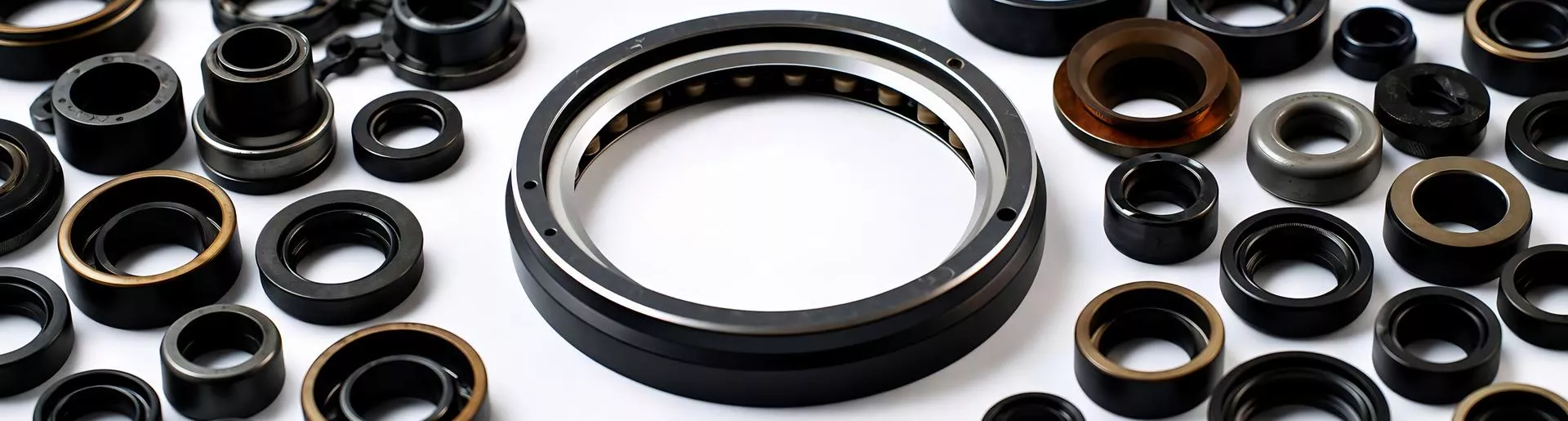
Standard seals meet many common industrial requirements, but specialized equipment may require a unique profile, dimension or material.

Custom sealing products are often used when the installation space is limited, the operating medium is unusual, or the equipment must satisfy particular pressure, temperature or movement requirements.

For OEM manufacturers and industrial buyers, a well-defined custom sealing project starts with accurate technical information and a clear understanding of the intended application.
4f3ac0b7111e634.jpg

436.jpg

Step 1: Define the Application

The first step is to identify where the seal will be installed and what function it must perform.

Important information includes the equipment type, sealing location, movement, working medium, pressure, temperature and expected service life.

For example, a seal for a rotating shaft has different design requirements from a seal used in a reciprocating hydraulic cylinder.

Step 2: Provide Drawings or Samples

A technical drawing should include the essential dimensions and tolerances.

Information

Example or requirement

Inner diameter

Drawing-defined dimension in mm

Outer diameter

Drawing-defined dimension in mm

Cross-section

Seal thickness or profile dimensions

Material

NBR, FKM, EPDM, PU, PTFE or another specified compound

Hardness

Shore A or another applicable hardness scale

Temperature

Minimum and maximum operating values

Pressure

Normal and peak operating pressure

Movement

Static, rotary or reciprocating

Quantity

Prototype, trial batch or production volume

These fields are examples of information that may be needed. Not every seal uses all of them, and some profiles require additional geometric tolerances.

Step 3: Select the Appropriate Material

Material selection must be based on the complete operating environment.

NBR may be appropriate for compatible oil-based systems. FKM may be considered for selected high-temperature applications. EPDM is useful in many water-based environments. PTFE may be suitable where chemical resistance and low friction are important.

For demanding applications, the material grade, hardness, filler system and manufacturing process may significantly affect performance.

Step 4: Review the Seal Design

The profile must suit the available groove, mating surfaces, pressure direction and movement.

For dynamic seals, friction, wear and heat generation must be considered. For high-pressure applications, extrusion clearance and support-ring requirements may be important.

Custom dimensions should be checked against the actual housing and shaft geometry rather than selected solely from nominal measurements.

Step 5: Manufacturing and Quality Inspection

A suitable quality process may include incoming-material verification, dimensional inspection, visual inspection and application-specific testing.

Depending on the product, inspection may also cover hardness, surface condition, dimensional stability and performance under specified operating conditions.

Buyers should agree on inspection methods, tolerances, documentation and acceptance criteria before production begins.

Step 6: Prototype Evaluation and Production

For new designs, a prototype or trial batch can help confirm fit and functionality before mass production.

The evaluation should reproduce relevant operating conditions as closely as practical. Depending on the application, this may include pressure testing, temperature cycling, leakage measurement, movement testing or chemical exposure.

Once the design has been validated, the parties can confirm the production specification, packaging, quantity and delivery requirements.

Industries Requiring Custom Seals

Custom sealing products are used in automotive manufacturing, hydraulic equipment, pumps and valves, food-processing machinery, pharmaceutical filling, chemical dosing, industrial automation, energy equipment and specialized machinery.

Each industry has different priorities. Food and pharmaceutical equipment may require documented material compliance, while heavy machinery may emphasize abrasion resistance and pressure capability. Precision dispensing systems may place greater emphasis on low friction and dimensional consistency.

Conclusion

Successful custom seal manufacturing depends on clear specifications, appropriate material selection, accurate dimensions and verification under relevant operating conditions.

GUOHAO SEALS can discuss custom sealing requirements based on drawings, samples and application information. Final specifications, production capabilities, tolerances and testing arrangements should be confirmed with the manufacturer before an order is placed.


SHARE

Online service

Contact Us guohao@zgghmf.com 86-0769-88032701 +86 18200850198
Home Mobile
Top
Contact Us Contact Us
We use cookie to improve your online experience. By continuing to browse this website, you agree to our use of cookie.

Cookies

Please read our Terms and Conditions and this Policy before accessing or using our Services. If you cannot agree with this Policy or the Terms and Conditions, please do not access or use our Services. If you are located in a jurisdiction outside the European Economic Area, by using our Services, you accept the Terms and Conditions and accept our privacy practices described in this Policy.
We may modify this Policy at any time, without prior notice, and changes may apply to any Personal Information we already hold about you, as well as any new Personal Information collected after the Policy is modified. If we make changes, we will notify you by revising the date at the top of this Policy. We will provide you with advanced notice if we make any material changes to how we collect, use or disclose your Personal Information that impact your rights under this Policy. If you are located in a jurisdiction other than the European Economic Area, the United Kingdom or Switzerland (collectively “European Countries”), your continued access or use of our Services after receiving the notice of changes, constitutes your acknowledgement that you accept the updated Policy. In addition, we may provide you with real time disclosures or additional information about the Personal Information handling practices of specific parts of our Services. Such notices may supplement this Policy or provide you with additional choices about how we process your Personal Information.


Cookies

Cookies are small text files stored on your device when you access most Websites on the internet or open certain emails. Among other things, Cookies allow a Website to recognize your device and remember if you've been to the Website before. Examples of information collected by Cookies include your browser type and the address of the Website from which you arrived at our Website as well as IP address and clickstream behavior (that is the pages you view and the links you click).We use the term cookie to refer to Cookies and technologies that perform a similar function to Cookies (e.g., tags, pixels, web beacons, etc.). Cookies can be read by the originating Website on each subsequent visit and by any other Website that recognizes the cookie. The Website uses Cookies in order to make the Website easier to use, to support a better user experience, including the provision of information and functionality to you, as well as to provide us with information about how the Website is used so that we can make sure it is as up to date, relevant, and error free as we can. Cookies on the Website We use Cookies to personalize your experience when you visit the Site, uniquely identify your computer for security purposes, and enable us and our third-party service providers to serve ads on our behalf across the internet.

We classify Cookies in the following categories:
 ●  Strictly Necessary Cookies
 ●  Performance Cookies
 ●  Functional Cookies
 ●  Targeting Cookies


Cookie List
A cookie is a small piece of data (text file) that a website – when visited by a user – asks your browser to store on your device in order to remember information about you, such as your language preference or login information. Those cookies are set by us and called first-party cookies. We also use third-party cookies – which are cookies from a domain different than the domain of the website you are visiting – for our advertising and marketing efforts. More specifically, we use cookies and other tracking technologies for the following purposes:

Strictly Necessary Cookies
These cookies are necessary for the website to function and cannot be switched off in our systems. They are usually only set in response to actions made by you which amount to a request for services, such as setting your privacy preferences, logging in or filling in forms. You can set your browser to block or alert you about these cookies, but some parts of the site will not then work. These cookies do not store any personally identifiable information.

Functional Cookies
These cookies enable the website to provide enhanced functionality and personalisation. They may be set by us or by third party providers whose services we have added to our pages. If you do not allow these cookies then some or all of these services may not function properly.

Performance Cookies
These cookies allow us to count visits and traffic sources so we can measure and improve the performance of our site. They help us to know which pages are the most and least popular and see how visitors move around the site. All information these cookies collect is aggregated and therefore anonymous. If you do not allow these cookies we will not know when you have visited our site, and will not be able to monitor its performance.

Targeting Cookies
These cookies may be set through our site by our advertising partners. They may be used by those companies to build a profile of your interests and show you relevant adverts on other sites. They do not store directly personal information, but are based on uniquely identifying your browser and internet device. If you do not allow these cookies, you will experience less targeted advertising.

How To Turn Off Cookies
You can choose to restrict or block Cookies through your browser settings at any time. Please note that certain Cookies may be set as soon as you visit the Website, but you can remove them using your browser settings. However, please be aware that restricting or blocking Cookies set on the Website may impact the functionality or performance of the Website or prevent you from using certain services provided through the Website. It will also affect our ability to update the Website to cater for user preferences and improve performance. Cookies within Mobile Applications

We only use Strictly Necessary Cookies on our mobile applications. These Cookies are critical to the functionality of our applications, so if you block or delete these Cookies you may not be able to use the application. These Cookies are not shared with any other application on your mobile device. We never use the Cookies from the mobile application to store personal information about you.

If you have questions or concerns regarding any information in this Privacy Policy, please contact us by email at . You can also contact us via our customer service at our Site.