
 Français
 Español
 Português
 Русский
 Italiano
 日本語
 Deutsch

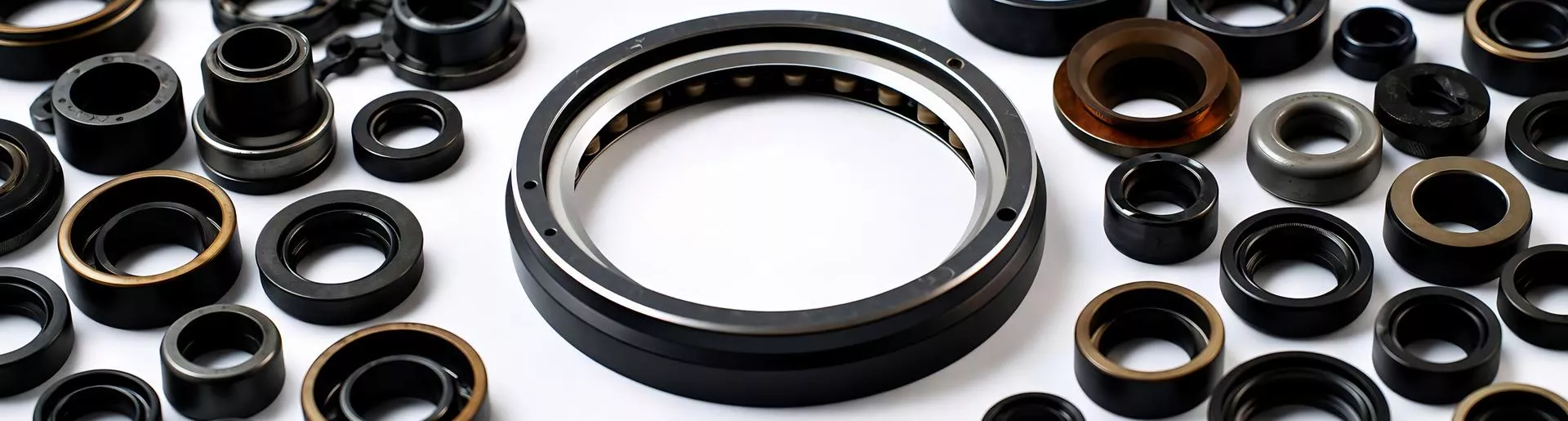
Dispensing and Potting Machine Seals: Precision Solutions for Automated Manufacturing
Introduction
Automated dispensing and potting equipment is used to apply adhesives, resins, lubricants, sealants and other process materials in controlled quantities.
These systems are common in electronics assembly, automotive component manufacturing, LED production, electrical insulation, battery manufacturing and industrial bonding processes.
Sealing components in dispensing equipment must control leakage while supporting accurate metering, repeatable movement and reliable operation. Material compatibility is particularly important because some adhesives and resins can swell, harden or chemically attack unsuitable sealing materials.
Common Dispensing Equipment
Precision dispensing valves
Control the release of small quantities of fluid or paste. Seals may experience frequent actuation and repeated pressure cycles.
Screw metering pumps
Transfer viscous materials through controlled rotational movement. Sealing requirements depend on the material's viscosity, abrasiveness and chemical composition.
Piston and plunger dispensers
Use reciprocating motion to meter materials. The seal must accommodate repeated movement while maintaining the required pressure.
Potting systems
Apply resins or encapsulation materials to protect electronic components and assemblies. Seals may be exposed to reactive chemicals and cleaning agents.
Material Selection Considerations
Material | Potential benefit | Application consideration |
|---|---|---|
PTFE | Low friction and broad chemical resistance | Seal design, wear and dimensional stability |
FKM | Resistance to many oils and chemicals | Specific resin and solvent compatibility |
NBR | Useful for compatible oils and general applications | May be unsuitable for some solvents or reactive chemicals |
PEEK | High-performance engineering polymer | Requires design and cost evaluation |
Specialized elastomers | Can offer specific flexibility or chemical properties | Must be validated for the actual process medium |
No single material is suitable for all dispensing fluids. For example, an epoxy resin, UV-curable adhesive and solvent-based material may interact differently with the same elastomer.
Important Technical Parameters
Precision dispensing equipment may require evaluation of:
Seal cross-section and available installation space.
Operating pressure and pressure fluctuation.
Valve actuation frequency and movement speed.
Fluid viscosity and presence of abrasive fillers.
Chemical compatibility with the adhesive or resin.
Friction, wear and repeatability.
Cleaning procedures and replacement intervals.
In high-frequency dispensing valves, low breakaway friction may help improve actuation consistency. However, the actual result depends on the complete valve design and the seal's operating conditions.
Industries and Applications
Dispensing and potting seals may be used in electronics manufacturing, printed circuit board assembly, automotive electronics, battery production, LED encapsulation, industrial bonding and precision fluid metering.
In electronics manufacturing, stable dispensing helps support consistent assembly quality. In battery and electrical component production, the sealing system must be compatible with the specific adhesive or encapsulation material.
Conclusion
Precision dispensing requires more than a seal that fits the valve. Material compatibility, friction, wear, pressure and actuation frequency must be considered together.
GUOHAO SEALS can evaluate specialized sealing requirements using equipment drawings, material information and operating parameters. Product suitability should be verified for each dispensing medium.
 Contact Us
 guohao@zgghmf.com
 86-0769-88032701
 +86 18200850198